From the grove to the bottle
How olive oil is made.
Olives are picked, cleaned and crushed into a paste. The paste is slowly mixed, then the oil is separated from water and solids. For extra virgin olive oil, there is no refining: the fruit and the work have to be good enough on their own.
I was there for the October and November 2026 harvests in Hinojares. Here’s the process — and the people behind the oil we bring to the UK.
Barry Doak · Founder
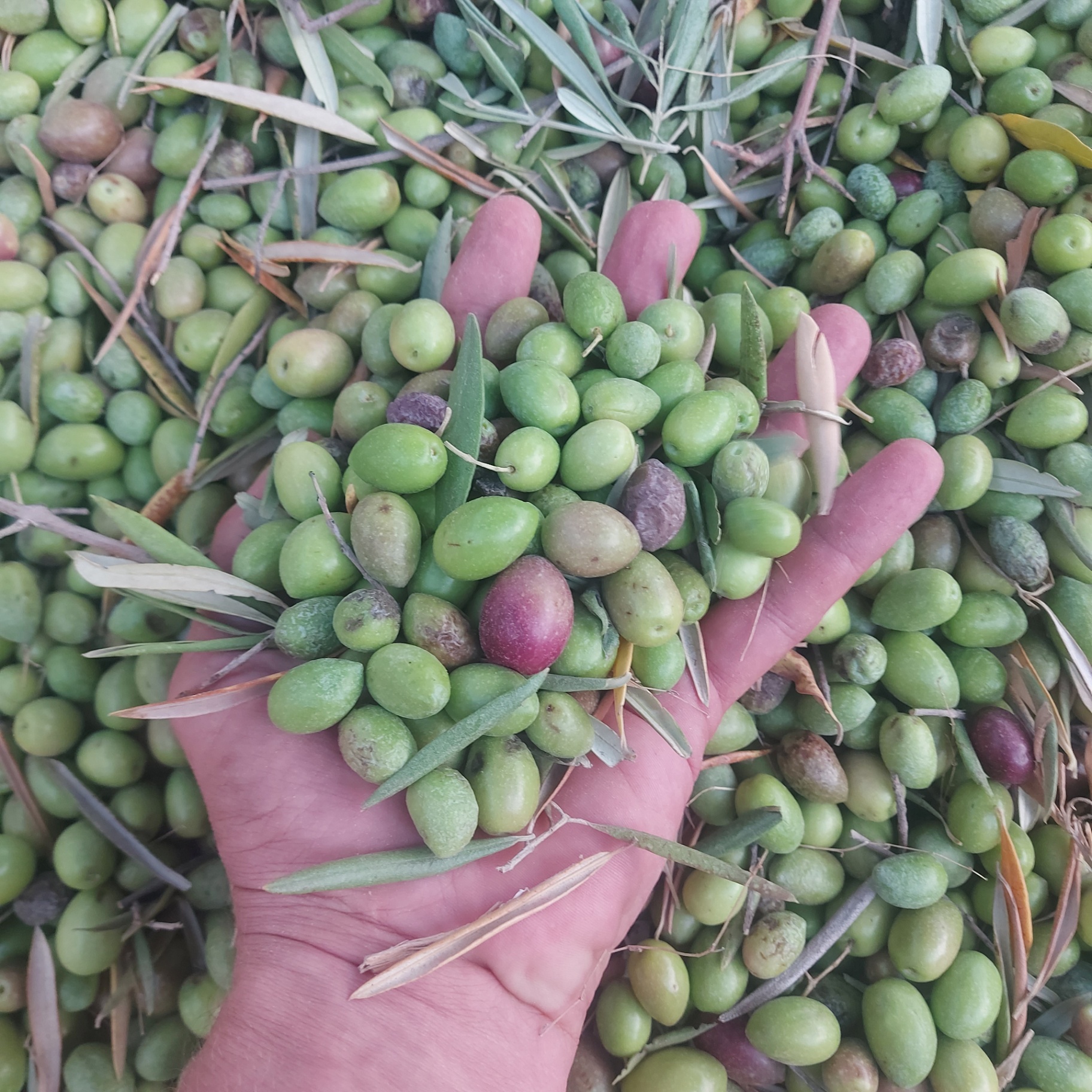
Not from a distance.
I was in Hinojares for both harvests. Fascinating, hard work, and very emotional at times. I don’t do this from a distance. I get my hands very dirty.
Nets gathered by hand. Leaves and twigs falling away from the fruit. Then the mill. Lucía and Albert opened their world to me; José and his family have worked the Everyday grove for generations.
Olive oil production, step by step.
01
Pick the olives.
Olive oil begins with fruit, not a seed. Harvest timing changes its flavour and composition. Early-picked olives tend to give less oil, with greener flavours; variety, growing conditions and milling also matter.
02
Clean and crush.
Leaves and twigs are removed and the olives are washed. The whole fruit is crushed into a paste, using a mechanical crusher or traditional millstones. This opens the cells that contain the oil.
03
Slowly mix the paste.
This stage is called malaxation: slow mixing helps small oil droplets join together so they can be separated. Time, temperature and oxygen exposure affect the finished oil. More heat is not simply more quality.
04
Separate the oil.
Modern mills commonly use centrifuges to separate oil from water and olive solids. Traditional presses apply pressure to the paste instead. Virgin olive oil is obtained by mechanical or physical means, without solvent extraction or refining.
05
Store, check and bottle.
The oil may be settled or filtered before bottling. Careful storage limits exposure to light, heat and oxygen. Chemical analysis and sensory assessment establish its grade; a green colour alone cannot tell you whether an oil is extra virgin.
Cold pressed or cold extracted?
People often say ‘cold pressed’ for both. In EU labelling rules, ‘first cold pressing’ describes a traditional hydraulic press operating below 27°C. ‘Cold extraction’ describes percolation or centrifugation below 27°C. These are different methods, not different grades of oil.
What makes it extra virgin?
Mechanical extraction is only part of the answer. Extra virgin oil must also meet chemical limits and sensory standards: no sensory defects and positive fruitiness. ‘Cold’ on a label is not enough to establish the grade, and a polyphenol count is not a substitute for the full assessment.
Tropicual · Picual · Andalusia
October. November. A real harvest.
Our oils come through a direct partnership with Tropicual. The Everyday grove is in the Barranco de la Salinilla near Hinojares, tended by Jose and his family generation after generation. For Everyday, the mill is Bosques del Sur. Tropicual packs the oil by hand in Spain; we pack UK orders in Hythe.
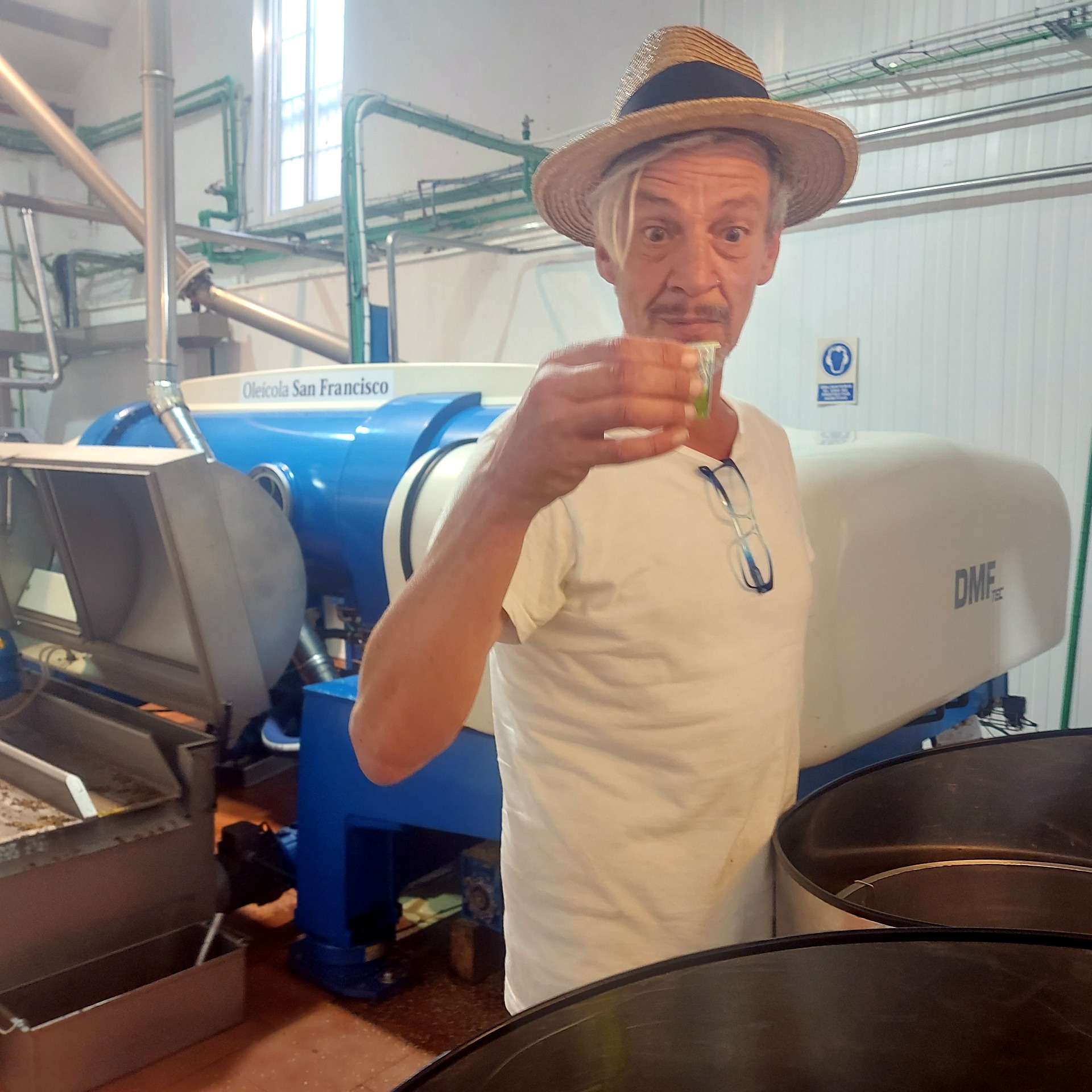
Taste the October harvest.
De Sierra is Tropicual’s early-harvest Picual from Sierra de Cazorla, Hinojares. Batch BGE44031 was harvested on 6 October 2026 and measures 1,040 mg/kg total polyphenols.
Creamy and viscous, with strong overtures of avocado, green walnut and vivacious green grass. The peppery catch catches and lingers with enduring intensity.
The current figure is Barry’s confirmed batch value; the full 2026/27 NMR report is still awaited. The linked 1,362 mg/kg certificate belongs to the previous batch, not BGE44031. The number matters. So do the land, the people and the taste.
Tropicual · From the soil up
Organic practice. A living grove.
Luciano — Lucía’s father — turned the family grove organic: living soil, natural predators and grass allowed to grow. The oil starts with how the land is tended, not with a number on a report.
- Living soil
- Grass and ground cover left between the trees; beneficial bacteria enrich the soil.
- Natural balance
- Natural predators for pests rather than synthetic sprays. Bees, birds and beneficial insects belong in the grove.
- A diverse grove
- Olives alongside almond, fig and vine, with more than forty native flora species. Legumes and vegetables help feed deer above the Everyday trees.
- The whole organism
- Soil, trees, wildlife and seasonal work considered together — the whole-farm principle at the heart of biodynamic thinking.
These are farming practices and biodynamic principles, not a claim that every bottle carries organic or biodynamic certification. Tropicual was named World’s Best Small Organic Producer at Ecotrama 2024.
Sources & further reading
- International Olive Council — olive oil definitions ↗
- EU Regulation 2022/2104 — marketing standards and cold-extraction labelling ↗
The production steps explain the general process. Tropicual-specific details come from our sourcing story and field notes; we do not publish an unverified milling time or temperature for a batch.