The science · A straight answer

Is olive oil good for you?

Olive oil can have a place in a varied diet. The research is worth reading — particularly work on Mediterranean dietary patterns and olive-oil polyphenols. But it does not mean every bottle delivers a health benefit, or that oil is a treatment.

Science and biology. Read the evidence, not just the headline.

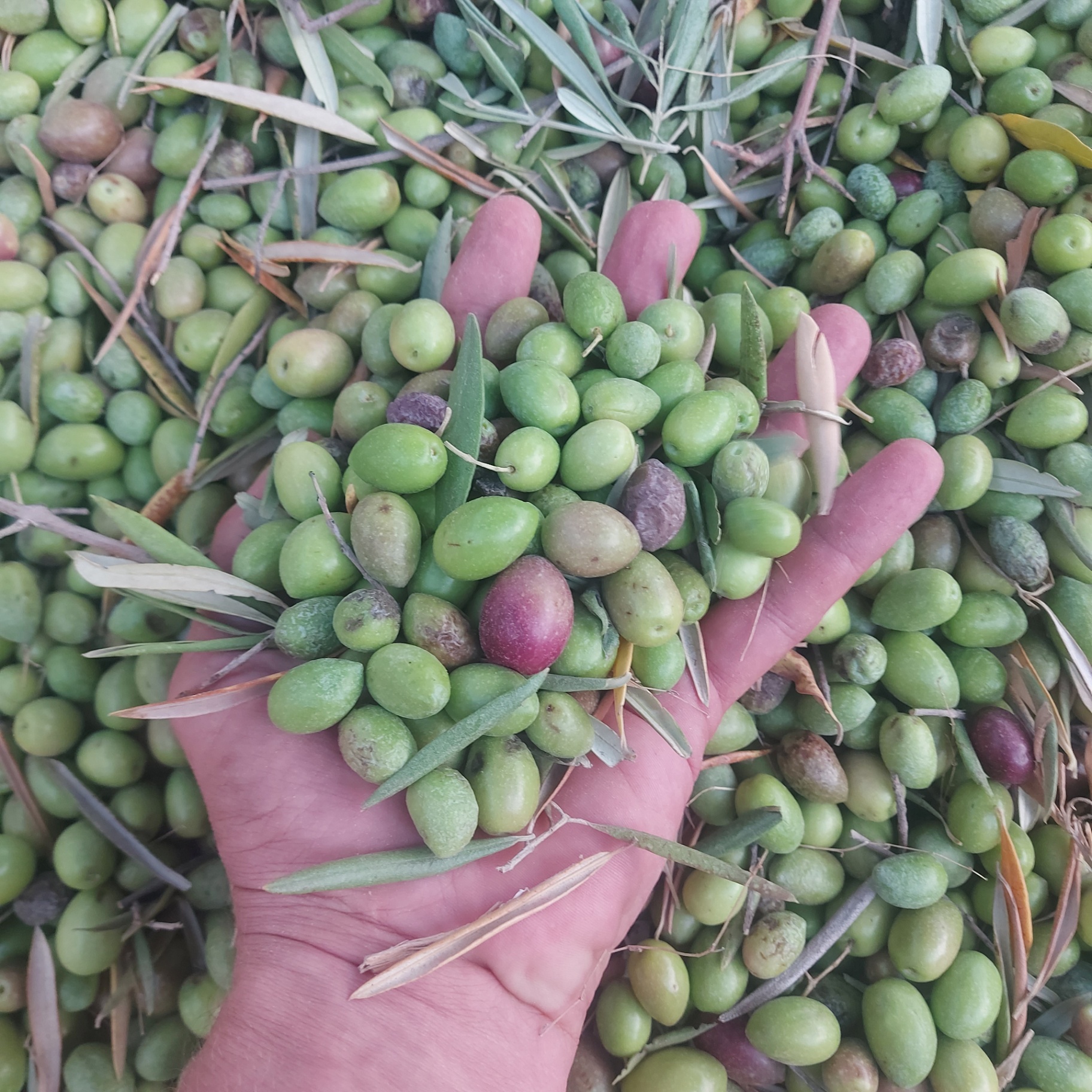
Barry’s photograph of a handful of freshly harvested olives and leaves

What does the research actually tell us?

A trial of a whole dietary pattern asks a different question from a short study of blood markers. Neither establishes that our oils prevent disease. Below are the same three source-linked studies used on our science page, with their designs and limits kept alongside them.

The British Heart Foundation also cautions that observational links between olive-oil consumption and living longer cannot prove cause and effect.

British Heart Foundation · Behind the headlines ↗

Is extra virgin olive oil different?

Extra virgin is an oil category, not a medical promise. Variety, harvest, extraction and storage influence its phenolic content and flavour. “Extra virgin” alone does not tell you how much hydroxytyrosol and its derivatives a serving contains.

Olive oil polyphenols: taste, measurements and batches →

How much olive oil should I take?

The daily 20 g statement below belongs to one specific authorised polyphenol claim for qualifying oils. It is not a universal dose or a recommendation to add oil on top of your usual food. These notes do not prescribe a diet or replace individual medical advice.

Read the study. Read the limits.

Research into olive oil, isolated compounds and dietary patterns asks different questions. A laboratory mechanism is not a demonstrated benefit from eating an oil; a supplement study is not a trial of our bottles. None of the papers below tested the Tropicual batches we sell.

These are reading notes, not instructions to use oil for a condition or replace medical care. Scientific publication does not itself authorise a food health claim.

EUROLIVE · 2006

Phenolic content in a human trial

Covas and colleagues compared three olive oils with different phenolic contents in a randomised crossover trial involving 200 healthy men. Each intervention used 25 ml daily for three weeks and measured blood lipid and lipid-oxidation markers.

Limits: short interventions, a specific participant group and biomarker outcomes. This was not a trial of nervous-system recovery or of any oil in our catalogue.

Covas et al. · The effect of polyphenols in olive oil on heart disease risk factors: a randomized trial · Annals of Internal Medicine ↗

PREDIMED · 2018

A dietary pattern, not an isolated bottle

The corrected and republished PREDIMED report followed 7,447 people at high cardiovascular risk assigned to Mediterranean-diet programmes with extra virgin olive oil or nuts, or a control programme. It assessed major cardiovascular events over a median 4.8 years.

Limits: the intervention included dietary advice and multiple foods. The republication addressed departures from random assignment. Its findings cannot be attributed to a particular commercial oil or extrapolated to treating a condition.

Estruch et al. · Primary Prevention of Cardiovascular Disease with a Mediterranean Diet Supplemented with Extra-Virgin Olive Oil or Nuts · NEJM ↗

TRPA1 · 2011

The peppery catch: sensory research

Peyrot des Gachons and colleagues investigated oleocanthal’s throat pungency using laboratory experiments, animal work and human sensory and tissue studies. They linked this particular sensation to TRPA1. This explains a sensory observation, not a therapeutic effect; pungency cannot establish a qualifying dose or a batch’s composition.

Peyrot des Gachons et al. · Unusual pungency from extra-virgin olive oil is attributable to restricted spatial expression of the receptor of oleocanthal · Journal of Neuroscience ↗

Choose oil for the whole story.

The land, the people, the harvest and the taste matter alongside the laboratory record. Explore our oils by flavour and batch — not a promised health outcome.

Read the October harvest story →

Para la gente.