Biotechnics · Field Note
Weaving the Imaginal Cells
In the dissolving caterpillar, imaginal cells find one another and hold. Nothing is optimised. Something is remade. This is the work: tools that let a body re-form on its own terms.
Biotechnic Tools
A tool is not neutral. The question Lewis Mumford asked is the one we ask of every bottle: does this serve life, or does it serve power?
The line Mumford drew
In Technics and Civilization (1934) and later in The Myth of the Machine, the historian Lewis Mumford drew a line through the whole of human tool-making. On one side he placed polytechnics — many small, diverse tools shaped to the needs of the body and the community, working with the grain of organic life. On the other he placed the megamachine: the monotechnic, centralized, power-driven system that treats the world as raw material and the human as a component.
Mumford was not against machines. He was against the assumption that scale and power are the same thing as progress. A tool, he insisted, carries the values of the hand that makes it. The same intelligence can build a plough that feeds a village or a system that grinds one down.
What biotechnic means
Mumford's name for the life-serving side was biotechnics — a technics oriented toward biological wholeness. Diverse. Human-scale. Democratic. Tools that ask what a living system needs and then work within its limits, rather than overriding them. It is the difference between a tool that cooperates with a process and one that substitutes for it.
Application to sovereign biology
This is where re-terroiring begins. Sovereign biology is the practice of reclaiming the conditions in which the body can recover itself. A biotechnic tool, in our hands, is something the body can use at the level of its own pathways — receptors, enzymes, the vagus nerve, the gut — instead of something imposed from above.
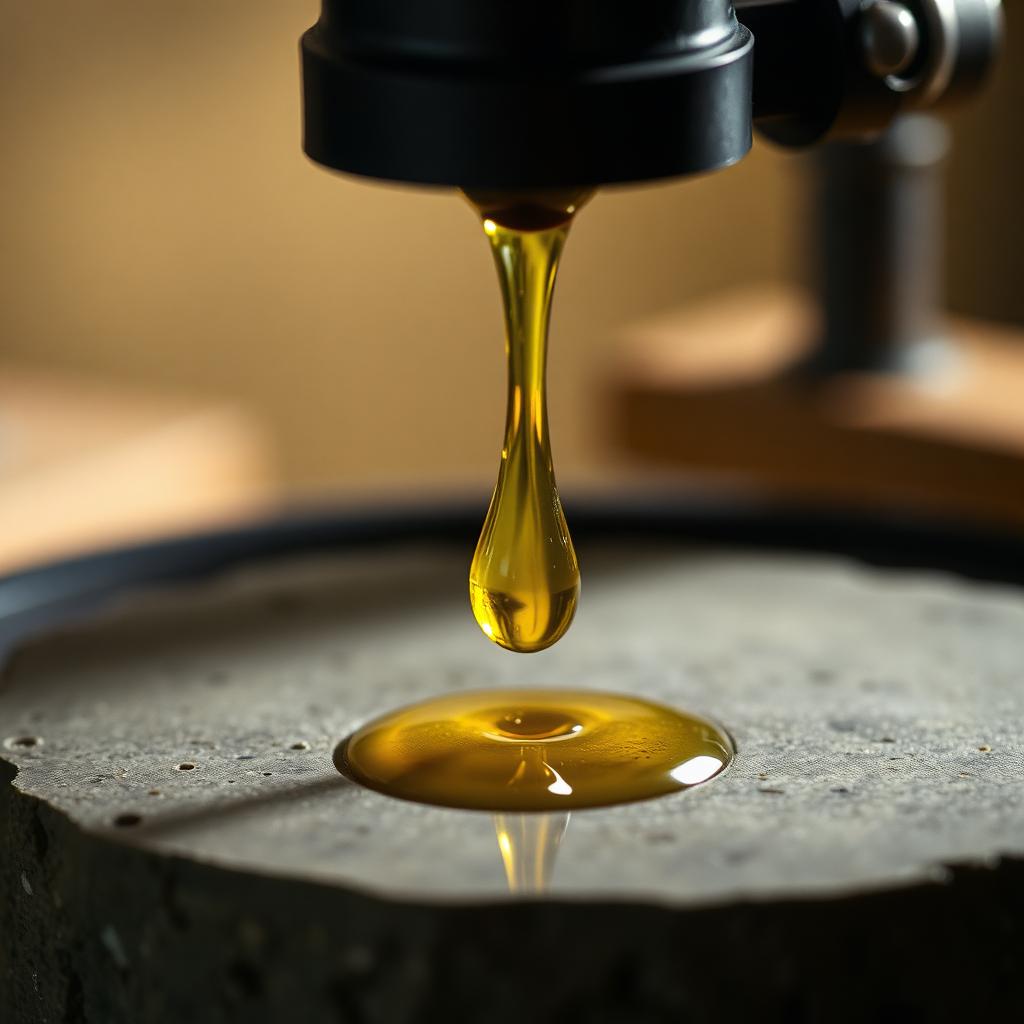
High-polyphenol olive oil is the clearest case we have. It is not food in the way a supermarket aisle means food. It is a pressed response: the chemistry a tree builds under stress, moved into a body that is under stress, where it does the same work — quiets inflammation, signals safety, feeds the microbiome. The tool did not come from a laboratory. It came from a hillside. But the mechanism is traceable, and we publish the lab report beside the bottle.
That is the whole standard. A biotechnic tool is biological in origin, verifiable in effect, and accessible by design. If it only reaches people who can already afford recovery, it is not biotechnic — it is decoration.
What this is not
This is not a rejection of medicine. Medicine that saves lives is not the megamachine — it is one of the better tools we have. The distinction is about relationship: whether a tool works with the body's own capacity to recover, or whether it makes that capacity unnecessary and then owns it. We are interested in the tools that give the organism back to itself.
The passage · orientation to recovery
01
Noticing
Something is off. The body is running hot and the usual fixes are not landing.
02
Slowing
Nothing is optimised yet. The pace drops enough for the nervous system to be heard.
03
Orientation
A different question: not how do I perform, but what conditions does this nervous system need?
04
Tooling
Biotechnic tools enter — pressed, fermented, grown. Biological in origin, verifiable in effect.
05
Re-terroiring
The body re-forms on its own terms. Sovereign biology, held by the person who carries it.
We are building a small library of biotechnic tools — pressed, fermented, and grown — each one a way of handing biology back to the people who carry it.
The body is not a problem to be solved. It is a living system to be nurtured. We choose the tools that tend it.
The Radical Apothecary.